

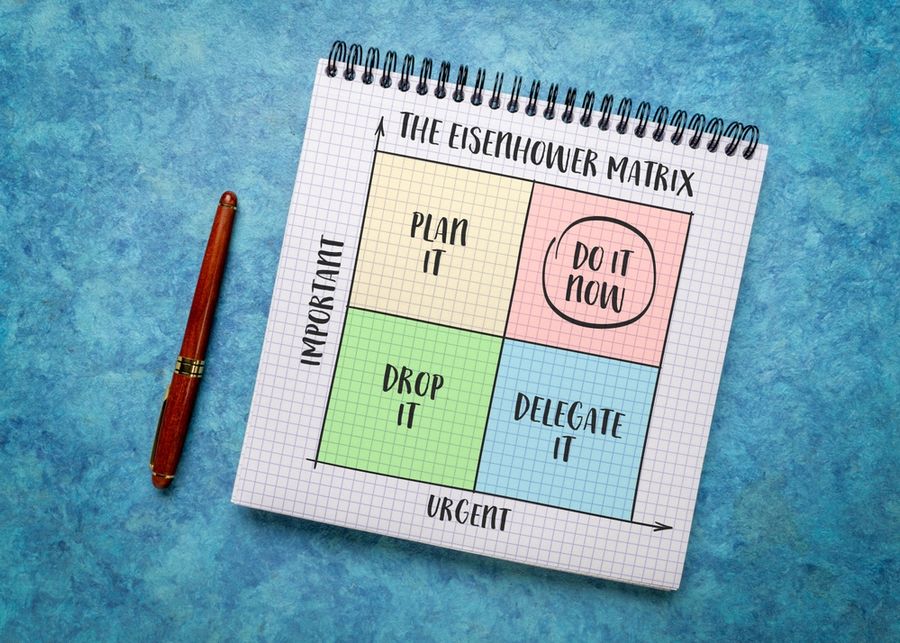
When everything feels important, deciding what to work on first can become overwhelming. The Eisenhower Matrix is a simple decision-making tool that helps you sort tasks based on urgency and importance. While it is often used in work settings, it can be just as effective for personal goals. By clearly separating what needs attention now from what truly matters long term, the matrix helps reduce stress and improve follow-through without adding complexity.
What the Eisenhower Matrix Is and How It Works
The Eisenhower Matrix is a four-quadrant framework that sorts tasks into categories based on two questions: Is this urgent, and is this important? Urgent tasks demand immediate attention, while important tasks contribute to long-term goals and values. When combined, these two factors create four clear categories.
The four quadrants are: urgent and important, important but not urgent, urgent but not important, and neither urgent nor important. The strength of the matrix is that it forces you to decide where each task belongs. Instead of reacting to everything as it comes up, you step back and choose how to spend your time with intention.
Applying the Matrix to Personal Goals
Personal goals often get buried under daily responsibilities. The Eisenhower Matrix helps bring those goals back into focus by showing how they compete with everyday tasks. For example, exercising regularly may be important but not urgent, while responding to a message may feel urgent but have little long-term value.
Start by listing everything you want or need to do, including habits, responsibilities, and goals. Then place each item into one of the four quadrants. This process alone often reveals where time and energy are being misused. Seeing goals laid out visually makes it easier to understand why some priorities never seem to move forward.
Focusing on Important but Not Urgent Goals
The most powerful quadrant for personal growth is “important but not urgent.” This is where goals like learning a new skill, improving health, or strengthening relationships usually live. These tasks do not demand immediate attention, which makes them easy to delay, but they create the biggest long-term benefits.
Using the matrix helps you protect time for this quadrant. Instead of waiting for these goals to become urgent, you can schedule them intentionally. Even small, regular actions make progress possible. Treating important goals as planned commitments rather than optional tasks increases the chance that they actually happen.
Reducing Time Spent on Urgent but Unimportant Tasks
Urgent but unimportant tasks are often the biggest source of distraction. These might include unnecessary messages, interruptions, or favors that do not align with your goals. They feel pressing, but they rarely move your life in a meaningful direction.
The matrix helps you spot these tasks and decide how to handle them. Some can be delayed, delegated, or handled in batches. Others may need firmer boundaries. By limiting how much time these tasks consume, you create more space for goals that matter to you personally.
Letting Go of What Does Not Matter
The final quadrant includes tasks that are neither urgent nor important. These activities often take the form of mindless habits, excessive scrolling, or commitments that no longer serve a purpose. While not all downtime is bad, this quadrant highlights where time slips away without clear benefit.
Using the matrix encourages honest reflection. If an activity consistently lands in this category, it may be worth reducing or removing it. This does not mean eliminating enjoyment, but it does mean being aware of what you are trading for your time and attention.
Turning the Matrix Into a Weekly Habit
The Eisenhower Matrix works best when used regularly. Many people review it weekly to reassess priorities and adjust plans. A weekly check-in allows you to move tasks between quadrants as circumstances change and prevents important goals from being forgotten.
This habit also reduces decision fatigue. When you already know which tasks deserve focus, daily choices become easier. Instead of reacting to whatever feels loudest, you can return to the matrix and follow a plan that reflects your values and goals.
Common Mistakes to Avoid
One common mistake is labeling too many tasks as urgent and important. This defeats the purpose of the matrix and recreates the feeling of overload. Be honest about what truly requires immediate action versus what simply feels uncomfortable to delay.
Another mistake is ignoring the “important but not urgent” quadrant. This is where personal goals live, and skipping it leads to frustration over time. The matrix only works when you actively schedule and protect time for this category, even when life feels busy.
A Clearer Path to Meaningful Progress
The Eisenhower Matrix is a practical tool for turning personal goals into daily action. By separating urgency from importance, it helps you focus on what truly matters instead of reacting to constant demands.
When used consistently, the matrix creates structure, reduces stress, and protects time for long-term growth. For anyone struggling to balance daily tasks with personal goals, this simple framework offers clarity and a more intentional way forward.