

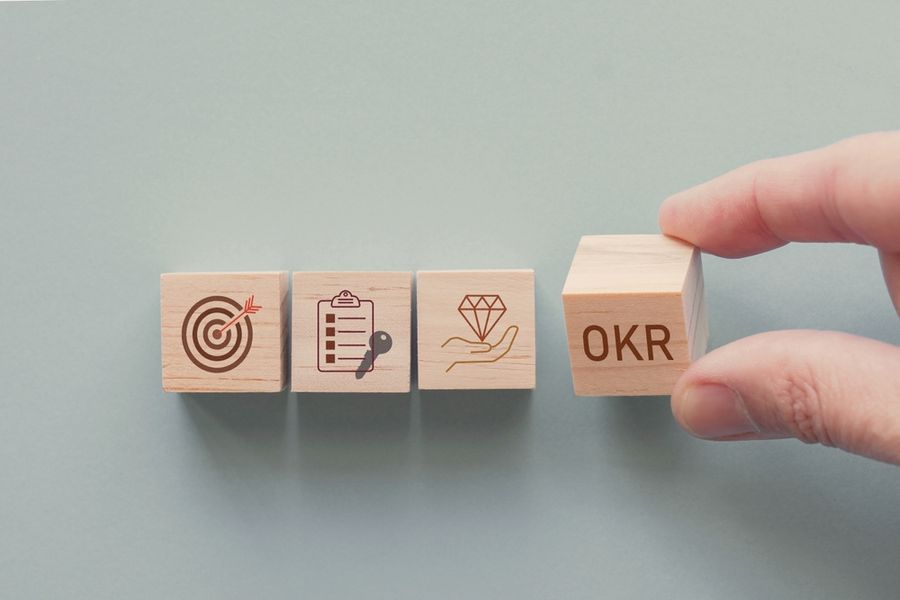
Objectives and Key Results, often called OKRs, are widely used in workplaces to set direction and measure progress. But the framework is not limited to professional goals. Personal OKRs can be just as useful for health, learning, finances, or family life. By separating what you want to achieve from how you will measure progress, OKRs bring clarity without pressure. Used thoughtfully, they help turn personal goals into focused, realistic action.
What Personal OKRs Are and Why They Work
OKRs are made up of two parts. The objective is a clear, meaningful goal you want to work toward. The key results are specific outcomes that show whether you are making progress. The objective sets direction, while the key results provide structure.
Outside of work, this framework works because it balances ambition with flexibility. Instead of vague intentions like “get healthier” or “learn something new,” OKRs ask you to define what success looks like. This clarity reduces confusion and makes it easier to decide how to spend your time and energy.
Choosing the Right Personal Objectives
A strong personal objective should feel motivating but not overwhelming. It should reflect something you genuinely care about, not something you think you should want. Objectives work best when they focus on direction rather than tasks.
For example, “Build a consistent movement routine” is a stronger objective than “Go to the gym more.” The first describes a desired state, while the second sounds like a chore. Personal objectives should be limited in number. One to three objectives at a time is usually enough to stay focused without feeling scattered.
Writing Key Results That Support Real Life
Key results are where personal OKRs often succeed or fail. Good key results are specific, measurable, and realistic. They describe outcomes, not activities. This distinction keeps the focus on progress rather than busywork.
For example, if your objective is “Improve daily energy,” key results might include “Walk for 20 minutes at least four days a week” or “Go to bed before 11 p.m. on weeknights.” These results are clear and easy to track, but they still allow flexibility in how you achieve them.
Avoid setting too many key results. Two to four per objective is usually enough. Too many measurements can create pressure and reduce follow-through.
Applying OKRs to Common Personal Areas
Personal OKRs can be applied to many parts of life. In health, they can support habits like movement, sleep, or nutrition. In learning, they can guide skill-building or reading goals. In finances, they can clarify saving or spending priorities.
For relationships or family life, objectives might focus on connection rather than outcomes. For example, an objective like “Strengthen family communication” could include key results such as “Have one device-free dinner together each week” or “Schedule a weekly check-in conversation.” These OKRs focus attention without turning personal life into a performance review.
Setting Time Frames Without Pressure
OKRs are often tied to set time periods, such as quarterly cycles. For personal use, time frames should be flexible. Many people use monthly or seasonal OKRs to match natural rhythms.
The goal of a time frame is reflection, not enforcement. At the end of a period, you review what worked and what did not. You do not need to “pass” or “fail.” In fact, personal OKRs often work best when success means learning rather than hitting every target.
Reviewing and Adjusting Personal OKRs
Regular review is essential. A short weekly check-in helps keep OKRs visible and relevant. During this review, you look at progress, notice patterns, and adjust expectations if needed.
If a key result consistently feels unrealistic, it may need to be simplified. If an objective no longer feels meaningful, it can be replaced. Personal OKRs should support your life, not add stress. Adjustment is a sign that the system is working, not that you failed.
Avoiding Common Mistakes With Personal OKRs
One common mistake is turning OKRs into strict rules. Personal OKRs are tools, not contracts. Treating them too rigidly can lead to guilt or burnout. Flexibility is key.
Another mistake is choosing objectives based on comparison. Personal OKRs should reflect your priorities, not someone else’s. Finally, tracking too many areas at once often leads to shallow progress. Fewer objectives with more attention usually lead to better results.
Using Simple Tools to Track OKRs
You do not need special software to use personal OKRs. A notebook, simple document, or planner works well. The most important thing is that your OKRs are easy to review and update.
Keeping them visible helps reinforce focus. Some people place them at the front of a journal or review them during weekly planning. The simpler the system, the more likely it will be used consistently.
Bringing Clarity to Personal Goals
Using personal OKRs outside of work brings structure without rigidity. By clearly defining objectives and pairing them with realistic key results, you turn broad goals into actionable focus.
When reviewed regularly and adjusted with care, personal OKRs support progress across health, learning, relationships, and daily life. Rather than adding pressure, they create clarity, helping you move forward with intention instead of guesswork.