

Phones, tablets, and laptops make life easier, but constant access can also create distraction, tension, and fatigue. Many families want more balance but struggle to enforce limits once devices are everywhere. Device-free zones offer a practical way to reset habits without banning technology altogether. When done thoughtfully, screen-free zones encourage connection, focus, and rest. The key is designing them in a way that fits daily life, so they feel supportive rather than restrictive or unrealistic.
Why Device-Free Zones Matter
Device-free zones create clear boundaries between digital time and offline time. Without these boundaries, screens tend to spread into every moment, including meals, rest, and conversations. This constant exposure can reduce attention, increase stress, and weaken family connection.
By limiting devices in certain spaces, the brain gets regular breaks from stimulation. These breaks support better focus, calmer moods, and improved sleep. Device-free zones are not about control. They are about protecting specific moments and spaces that benefit from presence and attention.
Choosing the Right Spaces for Device-Free Zones
Not every room needs to be device-free. Zones work best when they are chosen intentionally. Common areas like dining rooms, bedrooms, and family rooms are often good starting points because they support rest or connection.
Bedrooms are especially important. Keeping devices out of sleeping areas reduces late-night scrolling and improves wind-down routines. Dining areas are another strong option, as shared meals benefit from conversation without interruptions.
Choosing spaces where devices already feel disruptive makes the change feel logical rather than arbitrary.
Set Clear and Simple Expectations
Device-free zones only work when expectations are clear. Vague rules like “less screen time” lead to confusion and arguments. Instead, define what the zone means. For example, no phones at the dinner table or no tablets in bedrooms after a certain time.
Keep rules simple and visible. Everyone in the household should understand where devices are not allowed and when. When expectations are consistent, enforcement becomes easier and less emotional. The goal is clarity, not constant reminders.
Involve the Whole Household
Rules are more likely to stick when everyone participates. Device-free zones should apply to adults as well as kids. When parents follow the same guidelines, the zones feel fair and shared rather than imposed.
Talking about why the zones exist helps build cooperation. Explaining that the goal is better rest, focus, or connection makes the change feel purposeful. Inviting input, especially from older kids, increases buy-in and reduces resistance.
Shared agreement turns rules into habits.
Create Physical Cues That Support the Zones
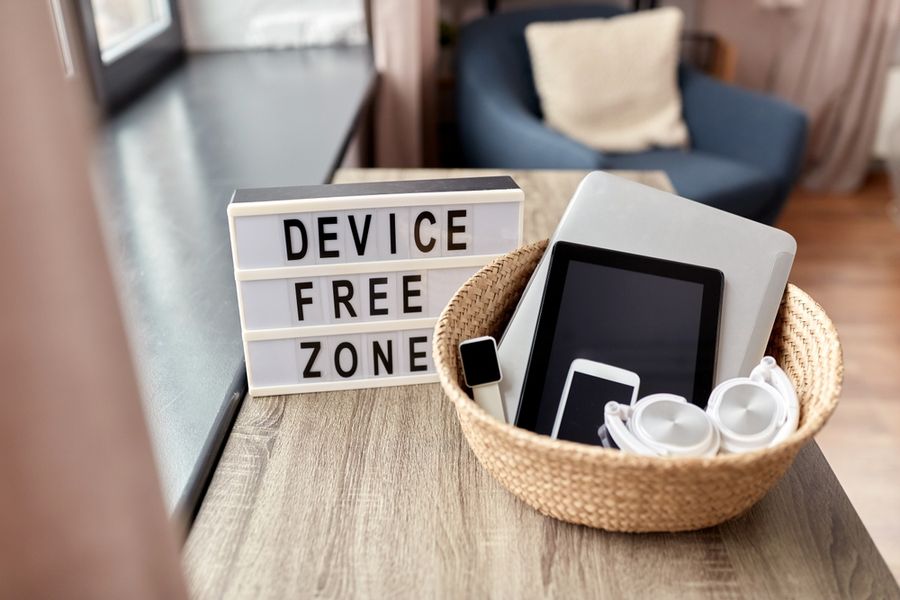
Physical cues make device-free zones easier to follow. Simple actions like placing a basket near the entryway for phones or setting up a charging station outside bedrooms help remove temptation.
Furniture layout also matters. Comfortable seating, books, games, or soft lighting make device-free spaces more inviting. When the space supports offline activity, devices feel less necessary.
Reducing friction makes it easier to follow the rules without constant effort.
Replace Screens With Clear Alternatives
Device-free zones fail when there is nothing else to do. Screens often fill gaps in time or attention. Providing alternatives helps prevent frustration and boredom.
Books, puzzles, board games, drawing supplies, or quiet music give people something to turn to instead of devices. These options do not need to be elaborate. Simple activities that encourage presence are enough.
When offline options are available, devices become less central.
Be Consistent, Not Perfect
Consistency matters more than strict enforcement. There will be exceptions, such as important calls or special occasions. Allowing flexibility prevents resentment while keeping the overall structure intact.
The mistake many households make is giving up after small slips. Device-free zones work through repetition, not perfection. Returning to the routine after exceptions reinforces the habit rather than weakening it.
Calm consistency builds trust and long-term success.
Handle Pushback Without Escalation
Pushback is normal, especially at the start. Responding calmly helps prevent power struggles. Instead of debating every moment, restate the rule and redirect attention.
Avoid long explanations in the moment. The rule has already been decided. Staying neutral reduces emotional intensity and shortens conflicts. Over time, resistance usually decreases as the routine becomes familiar.
Confidence and calm are more effective than repeated arguments.
Adjust Zones as Needs Change
Device needs change as children grow or routines shift. Reviewing zones occasionally helps keep them relevant. What worked last year may need adjustment.
Some zones may expand, while others may become less necessary. Flexibility shows that rules exist to support life, not control it. Adjustments should be intentional rather than reactive.
Regular check-ins help device-free zones stay useful rather than rigid.
Benefits That Appear Over Time
The benefits of device-free zones often show up gradually. Conversations become more natural. Meals feel calmer. Sleep routines improve. Focus during quiet activities increases.
These changes reinforce the value of the zones, making them easier to maintain. When people experience the benefits directly, motivation grows without constant enforcement.
Small changes add up to meaningful shifts in daily life.
Boundaries That Support Balance
Creating device-free zones at home works best when the focus is balance, not restriction. Clear expectations, shared participation, physical cues, and consistent routines make these zones easier to maintain.
By choosing the right spaces and supporting them with offline alternatives, homes become calmer and more connected. Device-free zones do not remove technology from life. They simply give space for rest, focus, and presence to return.